Commercial awnings vs. canopies: your guide to smarter shade in Chicagoland
If you manage a storefront, campus, or customer entrance, you already know shade is only part of the story. In Chicagoland, you also need snow-load resilience, wind resistance, clear sightlines, and a branded presence that welcomes people in every season.
This guide unpacks the practical differences between commercial awnings and canopies, where each excels for restaurants, retail, schools, healthcare, and hospitality, and how Thatcher Oaks handles everything in-house from site assessment and engineering to fabrication in Elmhurst and professional installation. You will also find regional permitting notes, typical cost drivers and ranges, and a fast FAQ to help you plan your next step.
Awnings vs. canopies, defined and compared
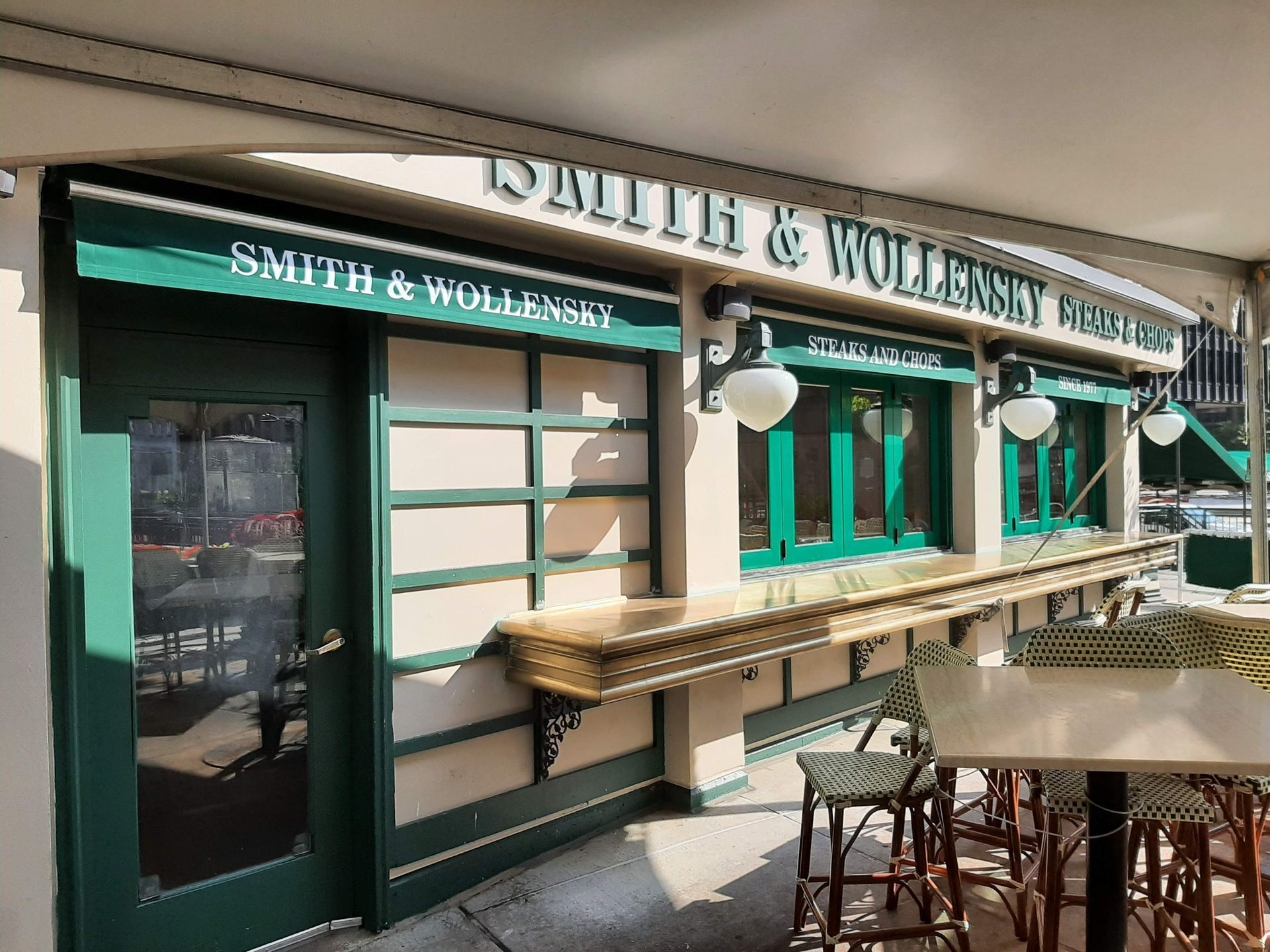
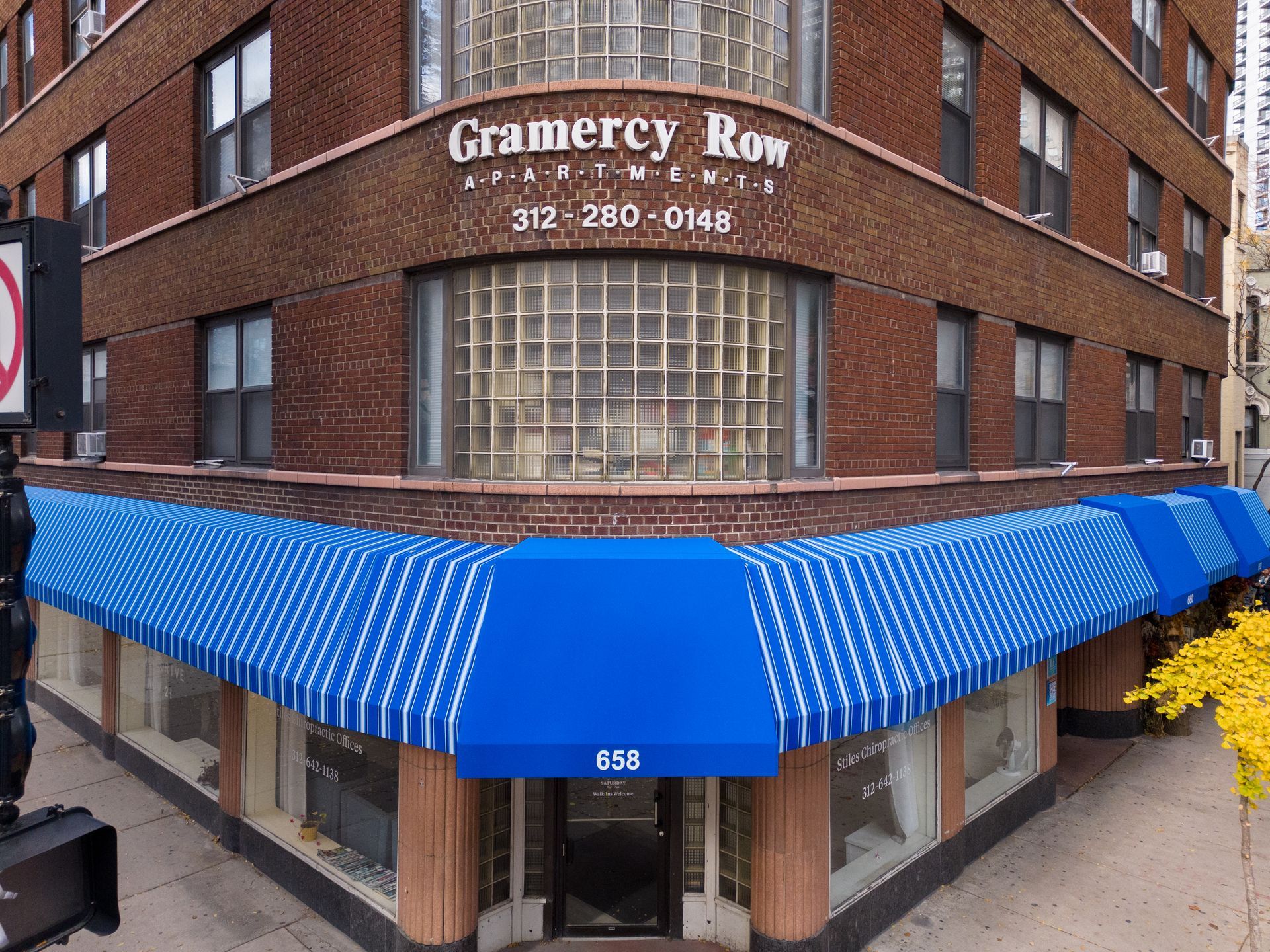
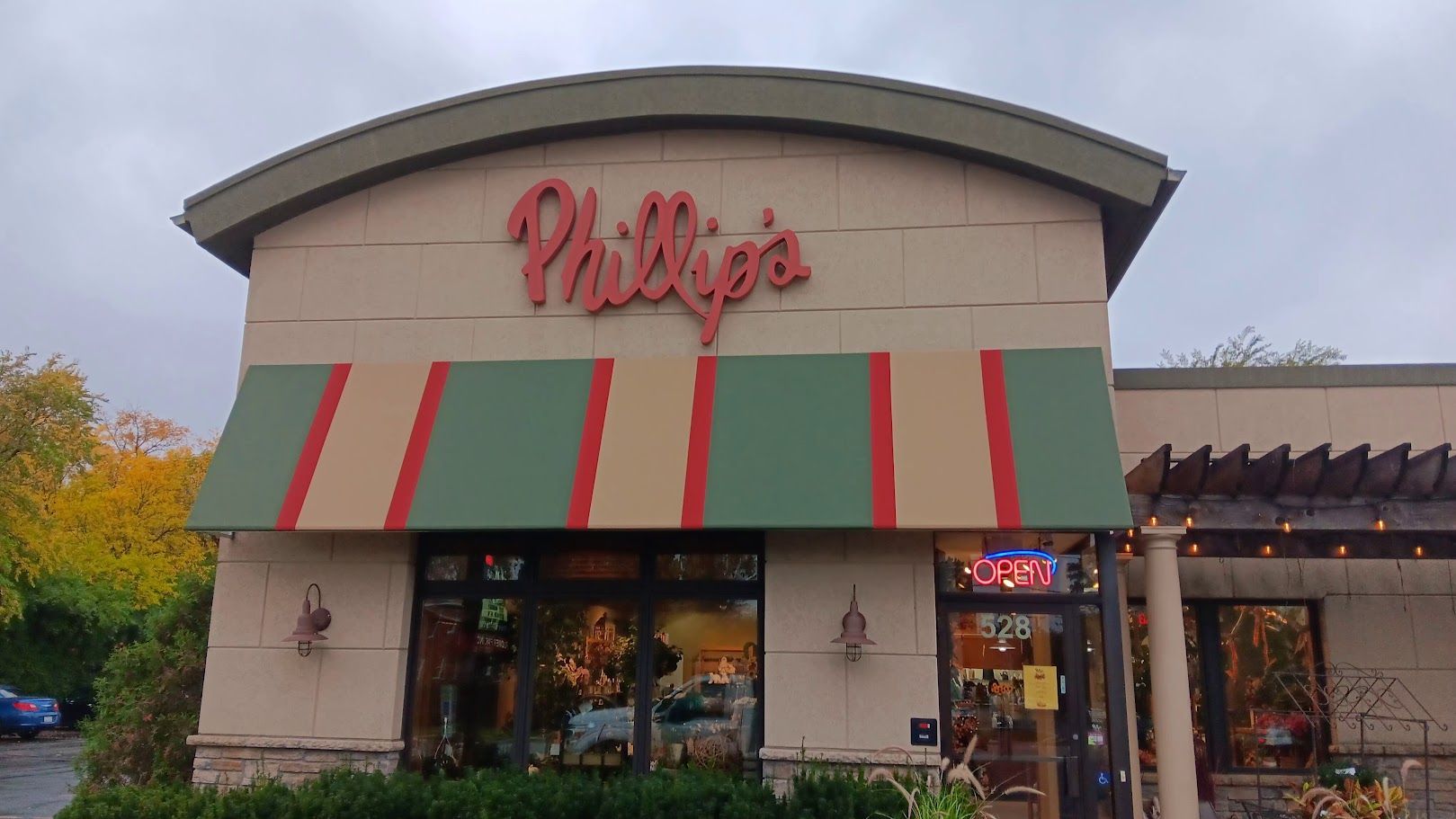
- What is a commercial awning: A fixed or retractable structure mounted to a building facade, typically with a fabric or metal covering, that provides shade and weather protection at doors, windows, or patios. Awnings are excellent for storefront branding, solar control on glazing, and smaller entries where projection can be modest.
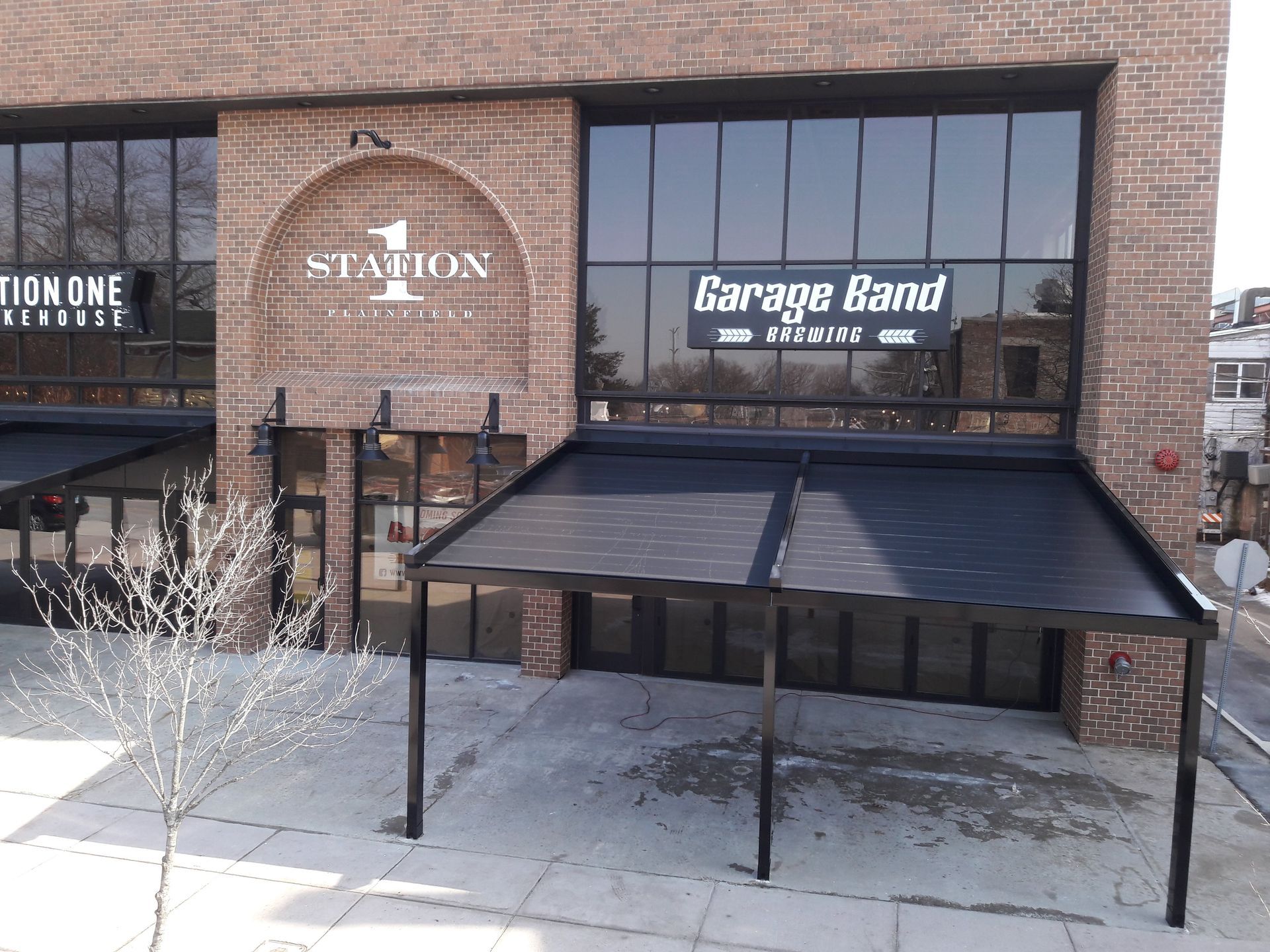
- What is a commercial canopy: A structurally supported overhead system engineered for higher snow and wind loads and longer projections. Canopies can be fabric-covered or built with standing seam metal roofs; they often include columns, integrated drainage, and lighting. Use canopies when you need durable coverage, extended projection, or continuous walkway protection.
Where each shines by industry:
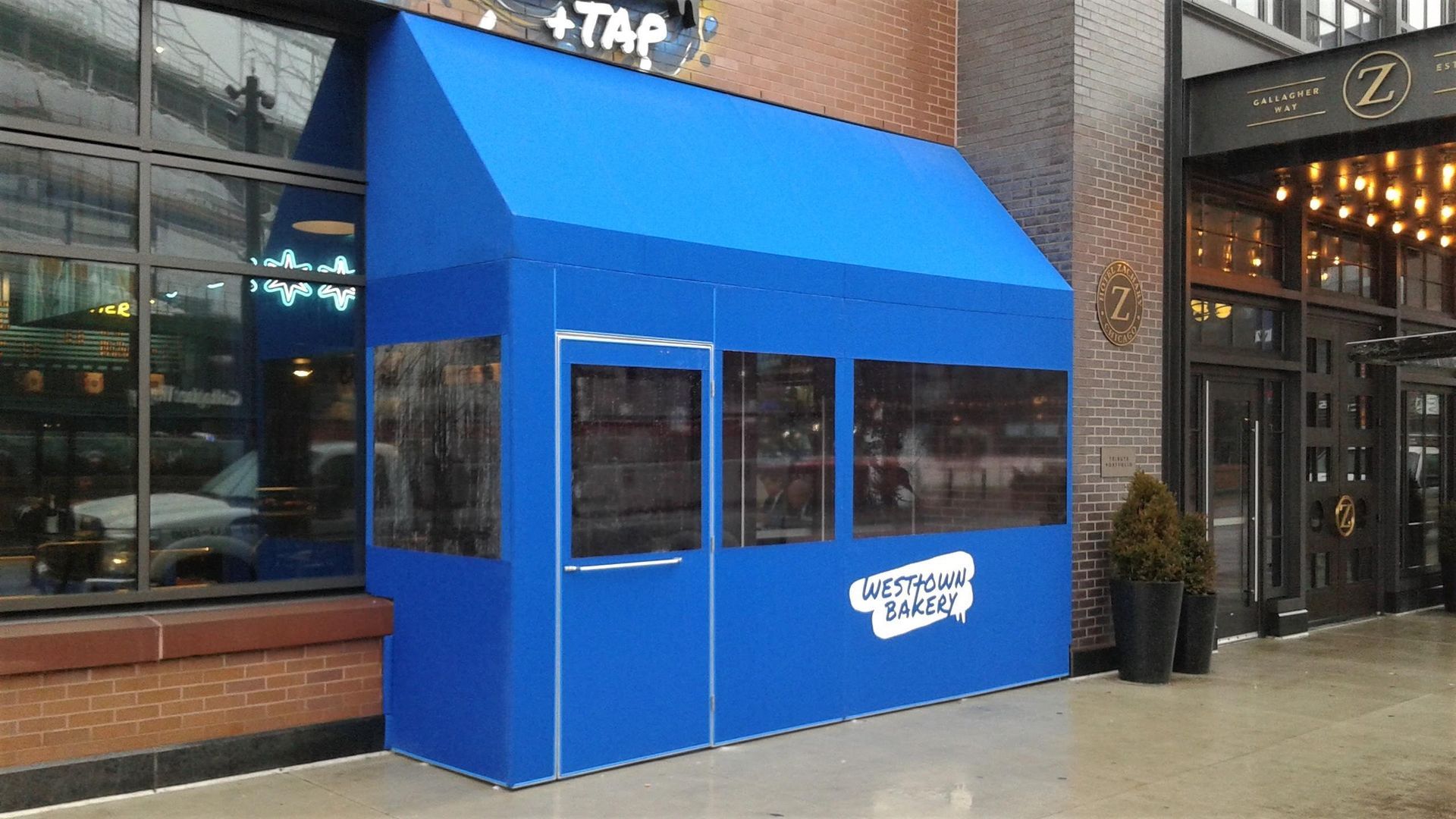
- Restaurants and cafes: Fabric awnings bring color, logo placement, and shade to patios and windows, reducing cooling loads in summer. Permanent or seasonal vestibules paired with a small entry canopy improve winter comfort and reduce drafts.
- Retail and multi-tenant: Awnings boost curb appeal and signage visibility. For larger plazas or covered pickup areas, a metal canopy with integrated lighting improves wayfinding and weather protection.
- Schools and campuses: Standing seam walkway canopies provide continuous coverage between buildings, clear 8 ft or more of vertical clearance, and integrate lighting and gutters for safe passage during snow or rain.
- Healthcare: Drive-up and patient drop-off canopies often require engineered spans, heated drainage options, and snow-guard planning to protect pedestrians.
- Hospitality: Hotel entries benefit from architectural canopies with signage integration, creating an immediate sense of arrival and protection for guests and luggage.
The Thatcher Oaks workflow, start to finish
Single-source accountability reduces risk and compresses timelines. Here is how your project moves from idea to installed.
- Site assessment: We visit your location to document clearances, wall conditions, power access, drainage paths, and pedestrian flows. For campuses, we confirm egress routes, ADA maneuvering clearances, and queueing needs.
- Engineering and detailing: Our team sizes the frame, supports, and attachment hardware for local wind and snow loads, including drift and sliding accumulation. When required, we provide stamped drawings and coordinate lighting, conduit routing, and gutter sizing.
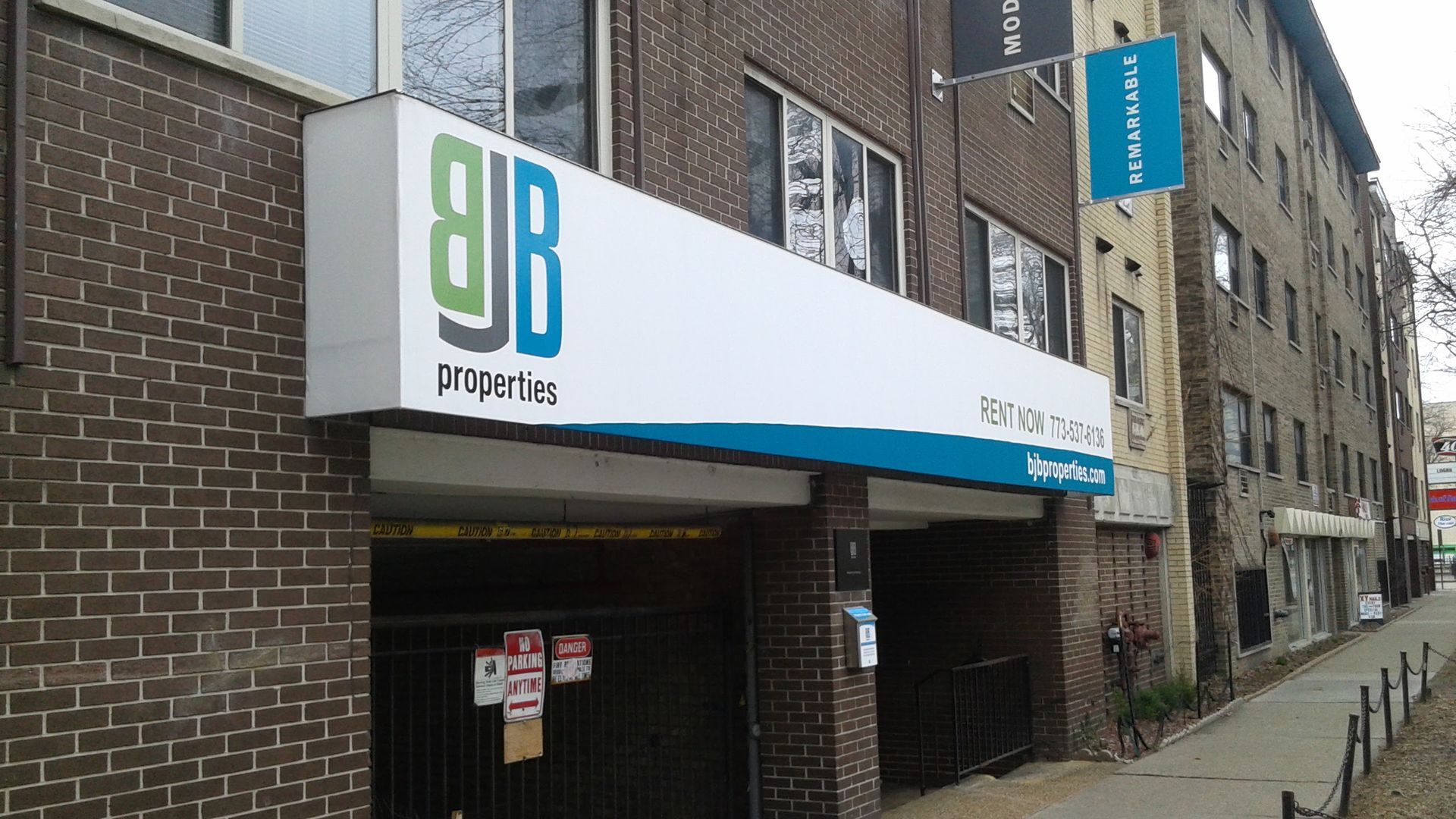
- Branding integration: We align colors, finishes, and graphics. This can include logo placement on valances, canopy fascia integration for illuminated address numbers, or coordinated sign housings to reduce wall penetrations.
- In-house fabrication in Elmhurst: Patterning, welding, finishing, and assembly occur at our Elmhurst facility to maintain quality control and shorten lead times.
- Professional installation: We phase work around business hours, prefabricate sections to minimize disruption, and provide clean, courteous crews. A recent customer shared, The installers were polite, on time, and left our entrance spotless. The project turned out better than we imagined.
- Warranty and service: After installation, we review maintenance basics and offer seasonal inspections, recover options for fabric, and repair support for long-term performance.
Permitting in Chicago and Northwest Indiana
Most municipalities require permits for commercial awnings, canopies, and vestibules. Typical submittals include structural drawings, site plans, and electrical permits where lighting is included. Temporary public-way vestibules may also require Public Way Use permits and proof of insurance. The City of Chicago, surrounding suburbs, and Northwest Indiana jurisdictions each maintain their own processes, fees, and inspection requirements, so timelines vary. Thatcher Oaks coordinates drawings and permit support with the authority having jurisdiction and aligns submittals with landlord approvals where needed.
Cost drivers and planning ranges
Every project is unique, but several factors reliably shape budget:
- Size and projection: Larger spans and deeper projections increase materials, supports, and footings where applicable.
- Fabric vs. metal: Fabric awnings are typically more economical upfront; standing seam metal canopies offer longer life and lower maintenance over decades.
- Lighting and electrical: Integrated LED lighting, conduit routing, and controls add cost but improve safety and visibility.
- Signage and graphics: Channel letters, printed graphics, or illuminated cabinets integrated into a canopy raise impact and complexity.
- Structural complexity: Snow-load requirements, wall conditions, and drainage details influence engineering effort and installation time.
Ballpark planning ranges, based on typical regional projects and not a formal quote:
- Fabric recover on a sound frame: often low- to mid-thousands.
- Standard commercial entry awning replacement: commonly mid-thousands, with many landing around the 7,500 to 12,000 range depending on projection, graphics, and lighting.
- Standing seam metal entry awnings and small canopies: from a few thousand upward, scaling with projection, guttering, and finish selections.
- Continuous walkway or drive-up canopies: tens of thousands once engineering, footings, lighting, drainage, and site work are included.
Beyond first cost, well-designed shade reduces solar heat gain and wind infiltration. Clients often report lower cooling loads in summer and fewer comfort complaints at entrances year-round.
Which option is best for your site
- Choose a fabric awning when branding, color, and solar control at windows and small entries are the priority, and when you want the option to refresh fabric and graphics over time.
- Choose a standing seam metal canopy when you need durable, long-projection coverage, integrated lighting and gutters, or continuous walkways with snow and wind performance at the forefront.
- Consider adding a temporary or permanent vestibule at high door-cycle entries to cut drafts and improve comfort during winter. Many operators see measurable HVAC run-time reductions.
Not sure where to begin? See examples and talk with our team at our Elmhurst showroom for project-specific guidance.
Helpful examples and related services
If you are planning a metal entry or walkway solution, explore our Elmhurst commercial shade solutions for ideas that match local conditions. You can also see how we handle integrated graphics with canopy signage, including snow-load rated options, in our Elmhurst portfolio. For seasonal comfort, review our guidance on Elmhurst temporary vestibules to understand timelines, permitting, and energy benefits.
- Explore Elmhurst commercial shade solutions: https://www.thatcheroaks.com/elmhurst-il-commercial-awnings
- See canopy signage with graphics and snow-load rated options: https://www.thatcheroaks.com/elmhurst-il-commercial-awnings
- Learn about Elmhurst temporary vestibules: https://www.thatcheroaks.com/commercial-vestibules
Quick FAQ
- What is a commercial canopy? A canopy is a structurally supported overhead system, often with columns, designed for longer projections, higher snow and wind loads, and features like gutters and lighting. Materials can be fabric or standing seam metal.
- Do I need a permit to put up an awning? In most Chicagoland and Northwest Indiana municipalities, yes. Expect building permits and, when lighting is included, electrical permits. Temporary vestibules in public ways may require additional approvals. Thatcher Oaks helps coordinate submittals and inspections.
- How much does a commercial awning cost? It depends on size, projection, material, graphics, lighting, and site conditions. Many standard commercial entries land around the 7,500 to 12,000 range, with fabric recovers in the low- to mid-thousands and larger metal systems scaling higher. We provide itemized proposals after a site review.
- Which type of awning is best? For small entries and window shade, a fabric awning often delivers the best mix of branding and solar control. For heavy-duty, long-projection coverage or continuous walkways, a standing seam metal canopy is typically the better long-term choice.
- Do awnings increase home value? Residential value varies by market, but commercial projects generally see improved curb appeal, brand visibility, and occupant comfort. Many businesses value lower cooling loads and better guest experience more than direct resale metrics.
- What is the average price for an awning? There is no single average because scope varies widely. Use the planning ranges above as a starting point, then schedule a site assessment for an accurate proposal.
Ready to see options tailored to your property
Thatcher Oaks is your trusted in-house manufacturer and installer serving Chicagoland and Northwest Indiana with design, engineering, permitting support, fabrication in Elmhurst, and professional installation. Visit our showroom at 450 W. Wrightwood Ave., Elmhurst, IL 60126 or call 630-833-5700 to schedule a consult. Bring photos and measurements, and we will walk you through finishes, graphics, and performance details that fit your budget and brand.